L o a d i n g

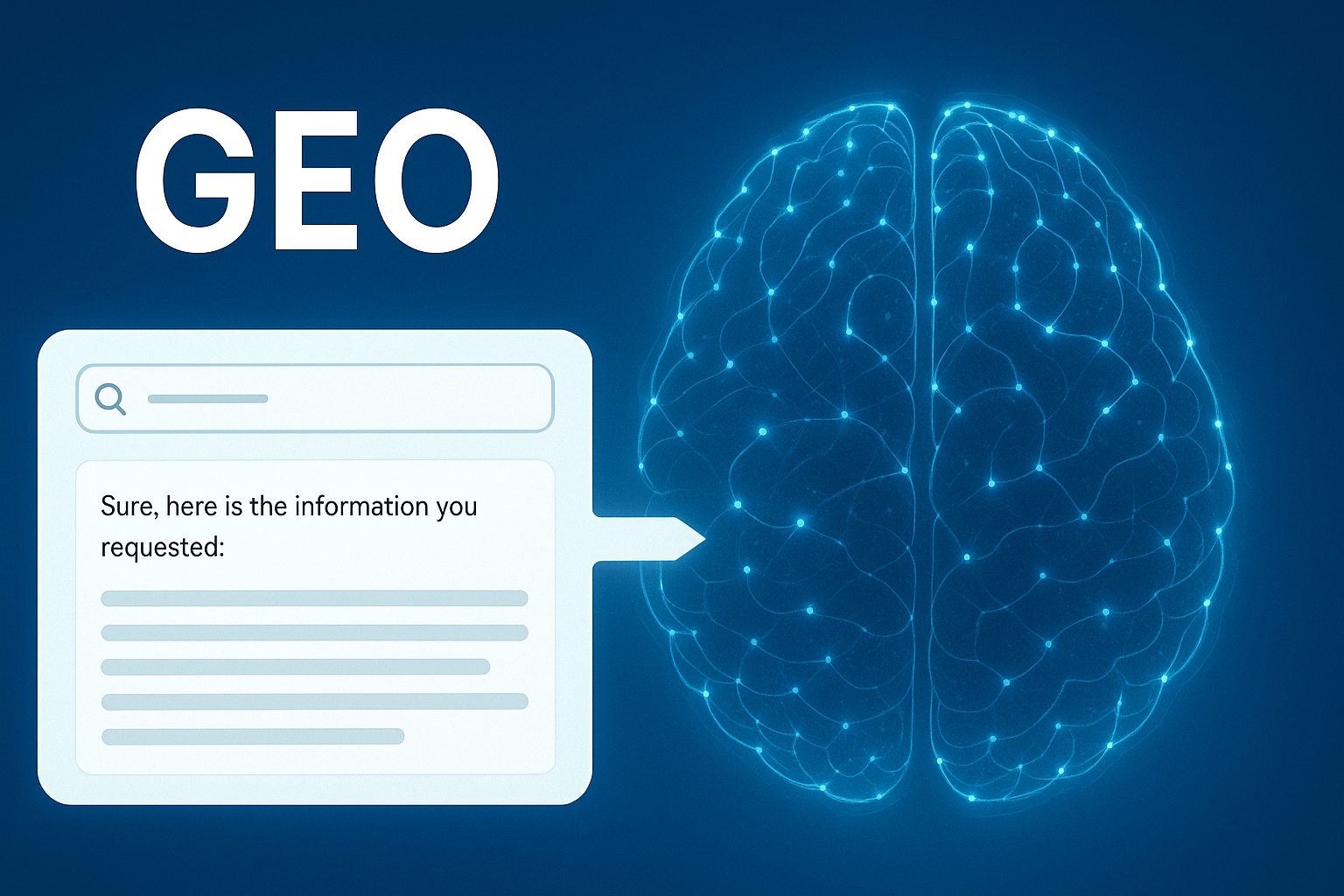
In today’s world, SEO (Search Engine Optimization) is still the most important bridge to being seen online. But gradually, generative AI engines such as ChatGPT, Gemini, Perplexity, and Google AI Overviews are taking over the place of traditional search engines. This is where the concept of GEO – Generative Engine Optimization enters the field: a process for improving the visibility of content in AI-generated results, not merely on Google’s results page.

What is GEO, and how does it differ from SEO?

  • What is GEO?
    The process of preparing content so that generative engines extract the answer to the user’s question from it and show it in their responses.

  • Difference from SEO
    SEO deals with visibility on results pages, whereas GEO tries to make content appear in direct, AI-generated answers to users. SEO deals with keywords and links, but GEO focuses more on content quality, structure, authority, and contextual relevance.

The importance of GEO for brands and websites

A revolution in search behavior
Many users rely on AIs to find quick, concise, and accurate answers. Not leveraging GEO means losing a large share of a brand’s online traffic.

Greater visibility and engagement
Content optimized for GEO is more likely to appear in AI answers and engage users.

Staying ahead in the future of marketing
As AI plays a larger role in search, SEO is no longer a sufficient tool on its own. GEO makes your digital marketing strategies future-oriented.

Building greater credibility
In GEO, credible, well-structured content from reliable sources is used more often.

Key strategies to improve GEO

1. Specialized research and analysis (AI Research)

Determine what questions users ask AI; what content your competitors provide; and which sources AI algorithms pay more attention to.

2. Structuring content suitably for AI

  • Clear, hierarchical headings (H1 → H2 → H3)
  • Using FAQs, direct answers, and short, clear sections
  • Using lists, bullets, and tables
  • Inserting a «question—direct answer» for important sections

3. Structured data and markup (Structured Data)

Using Schema, Knowledge Graph, microdata, and other techniques to help AI better understand content.

4. Attention to user intent and a conversational tone

Design content based on how users ask (such as «How…?»). The answer should be clear, human, and layered.

5. Using multiple media

Images with descriptive alt text, videos with transcripts, charts, and interactive tools: all of these increase the chance of AI using your content.

6. Building credibility and expertise

  • Content should be cited from reliable sources (E-E-A-T)
  • Including quotations, links to credible sources, the author’s name and expertise
  • Creating research-based content, statistics, and case studies

7. Presence in top lists, directories, and media

  • Being placed in high-ranking lists (Top-10 articles) is very effective
  • Being listed in reputable directories (such as Wikipedia, Clutch, G2) and gaining positive feedback.

8. GEO management and monitoring tools

For example, Wix’s new AI Visibility Overview tool, which provides a dashboard with metrics such as the number of AI citations, brand sentiment in AI, comparison with competitors, and the volume of AI-driven traffic.

Challenges and criticisms of GEO

  • The risk of information manipulation and reduced answer diversity
  • AI algorithms are still a black box and the exact rules of GEO are unknown
  • Competition based on authority and sources may seemingly cause brands with accurate but less prominent content to be excluded.

Practical suggestion: step by step to start GEO

  • Research relevant AI keywords (user questions, competitors)
  • Structure content with FAQs and short answers
  • Use schema and marked-up data
  • Emphasize expertise, quotations, and credible sources
  • Get into lists and directories
  • Monitor digitally with AI visibility tools
  • Periodically review and refresh content

Summary

Increasing visibility in the AI era requires strategies beyond traditional SEO. GEO helps your content appear in answers and recommendations when users ask AI – where much of future traffic has already shifted. By adopting structured, multimedia, credible, and targeted methods, you can secure your brand’s position in the future of search.


GEO چیست Articles

In today’s world, SEO (Search Engine Optimization) is still the most important bridge to being seen online. But gradually, generative AI engines such as ChatGPT, Gemini, Perplexity, and Google AI Overviews are taking over the place of traditional search engines. This is where the concept of GEO – Generative Engine Optimization enters the field: a process for improving the visibility of content in AI-generated results, not merely on Google’s results page.

What is GEO, and how does it differ from SEO?

  • What is GEO?
    The process of preparing content so that generative engines extract the answer to the user’s question from it and show it in their responses.

  • Difference from SEO
    SEO deals with visibility on results pages, whereas GEO tries to make content appear in direct, AI-generated answers to users. SEO deals with keywords and links, but GEO focuses more on content quality, structure, authority, and contextual relevance.

The importance of GEO for brands and websites

A revolution in search behavior
Many users rely on AIs to find quick, concise, and accurate answers. Not leveraging GEO means losing a large share of a brand’s online traffic.

Greater visibility and engagement
Content optimized for GEO is more likely to appear in AI answers and engage users.

Staying ahead in the future of marketing
As AI plays a larger role in search, SEO is no longer a sufficient tool on its own. GEO makes your digital marketing strategies future-oriented.

Building greater credibility
In GEO, credible, well-structured content from reliable sources is used more often.

Key strategies to improve GEO

1. Specialized research and analysis (AI Research)

Determine what questions users ask AI; what content your competitors provide; and which sources AI algorithms pay more attention to.

2. Structuring content suitably for AI

  • Clear, hierarchical headings (H1 → H2 → H3)
  • Using FAQs, direct answers, and short, clear sections
  • Using lists, bullets, and tables
  • Inserting a «question—direct answer» for important sections

3. Structured data and markup (Structured Data)

Using Schema, Knowledge Graph, microdata, and other techniques to help AI better understand content.

4. Attention to user intent and a conversational tone

Design content based on how users ask (such as «How…?»). The answer should be clear, human, and layered.

5. Using multiple media

Images with descriptive alt text, videos with transcripts, charts, and interactive tools: all of these increase the chance of AI using your content.

6. Building credibility and expertise

  • Content should be cited from reliable sources (E-E-A-T)
  • Including quotations, links to credible sources, the author’s name and expertise
  • Creating research-based content, statistics, and case studies

7. Presence in top lists, directories, and media

  • Being placed in high-ranking lists (Top-10 articles) is very effective
  • Being listed in reputable directories (such as Wikipedia, Clutch, G2) and gaining positive feedback.

8. GEO management and monitoring tools

For example, Wix’s new AI Visibility Overview tool, which provides a dashboard with metrics such as the number of AI citations, brand sentiment in AI, comparison with competitors, and the volume of AI-driven traffic.

Challenges and criticisms of GEO

  • The risk of information manipulation and reduced answer diversity
  • AI algorithms are still a black box and the exact rules of GEO are unknown
  • Competition based on authority and sources may seemingly cause brands with accurate but less prominent content to be excluded.

Practical suggestion: step by step to start GEO

  • Research relevant AI keywords (user questions, competitors)
  • Structure content with FAQs and short answers
  • Use schema and marked-up data
  • Emphasize expertise, quotations, and credible sources
  • Get into lists and directories
  • Monitor digitally with AI visibility tools
  • Periodically review and refresh content

Summary

Increasing visibility in the AI era requires strategies beyond traditional SEO. GEO helps your content appear in answers and recommendations when users ask AI – where much of future traffic has already shifted. By adopting structured, multimedia, credible, and targeted methods, you can secure your brand’s position in the future of search.

تمامی حقوق این سایت متعلق به جایزه سالانه هوش مصنوعی ایران (IAAA) می‌باشد